Copper sulfate is an inorganic compound, which is a transparent dark blue crystal or powder, soluble in water, and its aqueous solution is weakly acidic and blue.
ITEMS | STANDARDS | RESULTS |
Appearance | Blue transparent crystal | Qualified |
Purity(CuSO4·5H2O) | 99% min | 99.15% |
Copper(Cu) | 25.12% min | 25.18% |
Arsenic(As) | 4ppmmax | 3ppm |
Lead(Pb) | 10ppmmax | 8ppm |
Cadmium(Cd) | 10ppm max | 5ppm |
Water Insoluble | 0.5% max | 0.2% |
REMARK | Qualified | |
Application of copper sulfate in aquaculture
1. Prevention and treatment of fish diseases
Control fish diseases caused by protozoa and fish diseases caused by crustaceans. Splashing in the whole pool is often used in conjunction with ferrous sulfate, which is safe and effective.
2. Fish (fryling) seed medicine bath
Commonly used medicated bath concentration is 8 g/m3 copper-iron mixture aqueous solution, copper sulfate 8 g/m3 plus bleaching powder 10 g/m3 mixture aqueous solution 10-30 minutes.
The above two formulas can kill bacteria and protozoa on the body surface and gills, and are also effective for myxospores that have not formed cysts.
3. Kill algal plants and control the growth of harmful algae
Copper sulfate is effective in killing cyanobacteria, and can also be used to prevent and control fish poisoning caused by Microcystis and oodinosa.
4. Disinfection of tools and food courts
Disinfect fish gear with 20 g/m3 and soak in copper sulfate aqueous solution for half an hour to kill protozoa.
Food field disinfection can be carried out regularly during fish disease epidemic seasons.
Application of copper sulfate in livestock and poultry feed
1. Adding copper sulfate to livestock and poultry feed also has a significant synergistic effect. Copper sulfate is an important trace element drug additive required for animal feed.
2. The application of feed-grade copper sulfate in pig feed is mainly manifested in the following points: deworming effect, similar to antibiotic effect, special growth-promoting effect, etc.
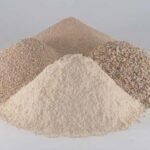
Feed grade manganese sulfate is pale pink or rose-colored powder or granules. The main content of manganese sulfate is ≥98%, and the content of manganese is ≥31.8%.
| ITEMS | STANDARDS | RESULTS |
| Appearance | White or little pink powder | Qualified |
| Purity(MnSO4·H2O) | 98%min | 98.50% |
| Manganese(Mn) | 31.8%min | 31.86% |
| Arsenic(As) | 0.0005%max | 0.00% |
| Lead(Pb) | 0.001%max | 0.00% |
| Cadmium(Cd) | 0.001%max | 0.00% |
| Water Insoluble | 0.05%max | 0.03% |
| Fineness(by 250μm sieve) | 95%min | >95% |
| REMARK | Qualified | |
Manganese sulfate is a trace element needed by crops that synthesize fatty acids. Adding it to animal feed has the effect of fattening.
Manganese is an indispensable trace element in animal husbandry and fishery feed, which can prevent diseases, promote growth and improve nutritional quality.
Increase the amount of manganese sulfate in the feed:
30-60g/t for pigs, 250-350g/t for broilers, 150-250g/t for laying hens, 150-250g/t for ducks, 200g/t for geese, 100-200g/t for cattle and sheep , fish 20-40g/t.
Sulfur is one of the mineral elements necessary for the animal body. The sulfur content in the animal body is about 0.15%.
| Items | Specification | Result | |||||
| Characters | White powder | Conform | |||||
| Assay | ≥99.0% | 99.2% | |||||
| Insoluble matter | ≤0.015% | 0.01% | |||||
| Aqueous reaction | Comply with the standard | Conform | |||||
| Sulphates and sulphites | ≤0.2% | 0.15% | |||||
| Sulphides | ≤0.0007% | 0.0005% | |||||
| Calcium | ≤0.007% | 0.006% | |||||
| Conclusion:The product complies with the specification of reagent grade. | |||||||
Adding sodium sulfate to the diet of pigs and poultry can promote the biosynthesis of protein, ribonucleic acid and taurine in the liver, increase the content of thiol and glutathione in tissues and organs, thereby stimulating metabolism in the body, improving production performance and the quality of livestock products;
Adding sodium sulfate to ruminant feed can accelerate the reproduction of ciliates in the rumen, promote the redox process of protein and fat metabolism, and have a detoxification effect, thereby improving disease resistance and promoting production performance.
Ferrous sulfate monohydrate is mainly used as a feed additive to supplement the iron needed for the growth of poultry and livestock, to promote the growth and development of poultry and aquatic animals, and to enhance disease resistance, and iron has a certain effect on the toxin contained in cottonseed cake in feed — gossypol Detoxification.
| VERIFICATION ITEM | STANDARD TESTED VALUE OR THE CONTRACT VALUE | THE REAL TESTED VALUE |
| Appearance FeSO4.H2O % Fe % As (ppm) Pb (ppm) Cd (ppm) FINENESS (PAST 180µm) | Gray powder ≥91.4 ≥30.0 ≤5 ≤10 ≤10 ≥95 | Complies 92.16 30.25 0.5 6 0.1 99 |
| CONCLUSION | Quality test passed. All ingredients are acquired from epidemic-free zone and proven not contaminated after test. | |
Iron is one of the essential trace elements for animals. It is a component of hemoglobin, myoglobin, cytochrome A and some respiratory enzymes, and participates in the transfer, exchange and tissue respiration of oxygen and carbon dioxide in the body.
As a supplement of iron in feed, ferrous sulfate monohydrate is closely related to hematopoietic function, oxygen transport and intracellular biological oxidation process. Iron deficiency in poultry animals can cause severe anemia, reduced hematocrit, and complete fading of the normal red and black colors of feathers. Iron deficiency in piglets can result in pale skin, rough coat, poor appetite and slow growth.
Feed grade ferrous sulfate monohydrate has the characteristics of high content of main elements, good solubility, good color, no agglomeration, good fluidity, no crushing and no sieving. Adding ferrous sulfate to feed can effectively prevent hypochromic microcytic anemia in animals caused by widespread iron deficiency. Prevention and treatment of iron-deficiency lassitude, shoulder edema, dyspnea, impaired body function, out-of-control temperature regulation, abnormal body temperature and other diseases in animals, and improve the survival rate of livestock and poultry.
Addition amount in feed (reference):
Piglet: 350g/ton, growing and finishing pig: 150-200g/ton, breeding pig: 250-300g/ton, chicken: 200-400g/ton, cattle: 300-400g/ton, sheep: 200-300g/ton, fish 500 -700g/ton.
Iron oxide, in its feed-grade form, serves several functions and has various applications in animal nutrition. Here are its functions and applications:
Pigment: Iron oxide is commonly used as a pigment in animal feeds to enhance the visual appeal of feed pellets or to impart color to certain types of feeds. This can be particularly important for feeds intended for poultry, fish, or pet species, where appearance may influence feed acceptance and consumption.
Identification: Iron oxide can be used as a marker or identifier in specialized feeds, such as medicated feeds or feeds intended for specific groups of animals. By adding iron oxide to the feed formulation, it becomes easier to visually distinguish medicated or specialty feeds from regular feeds, helping ensure proper feeding and management practices.
Inert Filler: Iron oxide may serve as an inert filler or carrier in feed formulations, helping to improve the flowability and handling characteristics of powdered or granular feeds. As an inert ingredient, iron oxide does not contribute to the nutritional content of the feed but can aid in the manufacturing process by providing bulk and facilitating uniform mixing of feed ingredients.
Environmental Considerations: Iron oxide used in feed applications is generally considered safe and environmentally benign. Unlike some synthetic colorants or additives, iron oxide is naturally occurring and poses minimal risk of environmental contamination or adverse effects on animals, humans, or ecosystems.
Regulatory Compliance: Iron oxide used in feed applications complies with regulatory standards and guidelines established by food and feed safety authorities. Its use in animal feed is regulated to ensure safe and effective use without compromising animal health or product quality.
Application in Various Animal Feeds: Iron oxide can be incorporated into various types of animal feeds, including poultry, swine, cattle, aquaculture, and pet feeds, for pigmenting purposes, identification purposes, or as an inert filler. Its versatility makes it suitable for use in different production systems and environments.
In summary, iron oxide feed grade primarily serves as a pigment and may also function as an inert filler or identifier in animal nutrition. Its applications extend to various animal species and feed formulations, contributing to improved feed appearance, handling, and management.
View Products
View Products
View Products
View Products